


After an abysmal and dreadful 2025-26 season that resulted in the New York Jets going 3-14, they now hold the No.2 pick in this year’s NFL Draft. The hope is that last year was a learning year and that with better quarterback play and more talent added to the roster, the Jets will look more competitive this year under Aaron Glenn and Darren Mougey. The Jets have been active this offseason, adding key veterans such as former Jets linebacker Demario Davis and quarterback Geno Smith, while also trading for Dolphins Safety Minkah Fitzpatrick. As free agency has come and gone, the next big offseason event is the NFL Draft.
Selecting within the top 5 of the draft can be a rare and franchise-altering opportunity for teams. It seems to be more common than ever that the Jets select within the top ten as a result of their poor play over the years. This isn’t the first time they’ve drafted with the No. 2 pick. The last pick was quarterback Zach Wilson, and that experiment failed for colossal reasons.
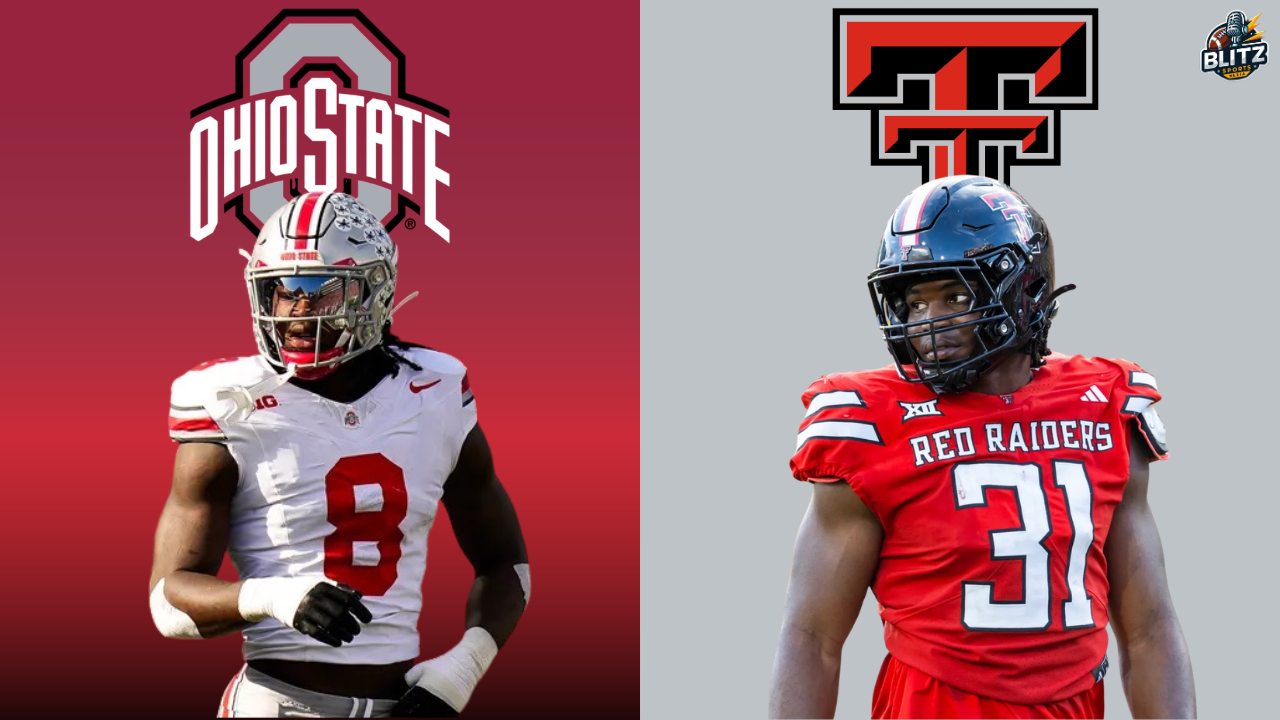
Can the Jets do better a second time around with their current draft spot? This time around, it’s likely that they’re selecting on the defensive side of the ball with the 2nd overall pick. As the draft approaches, it’s looking like the pick will come down between linebackers Avrell Reese and David Bailey.
Debates have been made on who the Jets should take. Reese is seen as a player with the most potential and high upside, while David Bailey is considered more of a pure edge rusher. Let’s take a look at both players and see how they’d fit on the Jets.

Prospect Profile: Avrell Reese
Reese is one of the most intriguing players of the draft due to his versatility. At Ohio State, he was listed at 6 ‘4, weighing 241 ILB as a hybrid linebacker where you can put him on the edge or the inside. Having learned under James Laurinaitis (linebackers coach) and Matt Patricia (defensive coordinator), Reese should transition to the NFL game smoothly.
At 20, he’s still got room to grow as a young prospect with limited experience as a starter, given that 2025 was a highly productive season. So if a team drafts Reese, you’re betting on the high upside and potential he brings as he continues to grow as a player. He’s viewed by teams as a player whose best football is ahead of him with rare physical traits that can be molded by coaching to be an elite difference maker in the NFL.
While at Ohio State, Reese showed elite athleticism with an explosive first step and sideline-to-sideline speed. Again, his versatility is what makes him stand out as coaches can use him like a chess piece, lining him up as an off-ball linebacker or on the edge on passing downs. He’s a player who has a high motor with the energy to never take plays off. Being seen as a modern NFL Fit with the speed and flexibility to play in today’s NFL game.
Teams might be hesitant to draft Reese due to his limited experience and the need for an immediate impact. When in the NFL, Reese will need to improve on his play strength and speed, as he’s not fully polished yet in terms of having the size to take on NFL-sized linemen. Hopefully, as he grows as a player, he will add strength to his size while learning techniques to disengage at the next level. He’s still raw as an edge player as he relies heavily on speed rather than a full move set, so whoever drafts him needs to coach him up into developing counters.
The player that he’s been compared to has been Micach Parsons due to their hybrid/edge linebacker roles, both showcasing elite burst and explosiveness.
Prospect Profile: David Bailey
David Bailey is seen as a prospect who is more refined and can make an immediate impact right now. Bailey, coming out of Texas Tech, stands at 6 ‘3, weighing 251, is seen as a dominant defensive player who can get to the quarterback.
Last year, he accumulated a ton of accolades as he was a First-team Associated Press All-American, Big 12 Conference DL of the Year, and was a finalist for the Lombardi Award (nation’s top linemen). He racked up 14.5 sacks, which tied in the FBS, along with ranking second in TFL with 19.5. Bailey was a key contributor to Texas Tech’s success last year, which had a lot of studs on defense, such as Jacob Rodriguez and Lee Hunter.
Bailey’s known for his power and physicality as he can shed blockers more consistently than most young defenders, along with playing a strong base and winning at the point of attack. Though Reese might show more speed, Bailey has the pass-rushing technique that sets him apart from Reese. Bailey has a high football IQ as he reads plays quickly and can diagnose blocking schemes well.
While Bailey is seen as a dominant force off the edge, he has versatility limitations as he’s at best when playing at one defined role, meaning that you can’t move him around different positions of the defense, and he is not as flexible in coverage or alignment. He’s shown limited elite athleticism and may struggle against faster NFL offenses.
Bailey has been compared to a lot of players, but one that sticks out in terms of play style is Aidan Hutchinson. Both players showed that they’re technically advanced, high motor, and reliable down-to-down impact.
What Bailey and Reese Bring to the Jets
Both Arvell Reese and David Bailey are tremendous prospects who could change the Jets organization forever, depending on what they’re looking for and how it’ll impact them not just in the present but in the future.
Arvell Reese is a defender who can be moved around the defense like a chess piece. Reese gives Aaron Glenn a versatile weapon he can move all over the formation, creating mismatches and disguising pressure. Having Reese on defense allows Glenn to disguise pressures, creating confusion for offensive lines, and he can blitz from different angles. He’s not done developing as a player, but with the right coaching, Reese can grow into one of the best defenders in the league.
While Arvell Reese brings a lot of versatility to the Jets, Bailey is an anchor. In Glenn’s defense, it relies heavily on winning at the line of scrimmage and playing disciplined assignment-sound football, and Bailey would immediately bring that.
Bailey would set the edge and maintain gap integrity, which is key for a Jets defense that wants to become physical. He’s a more polished pass rusher and is a trust factor, meaning he stays in position and executes assignments correctly. Unlike Reese, Bailey is more of a polished player and would make an immediate impact rather than having to be developed.
In the end, both Reese and Bailey project as future impact players in the league, and the Jets can’t go wrong with either. It ultimately comes down to what they value more: Reese, who opens up Aaron Glenn’s creativity, or Bailey, who brings structure and consistency.
The Jets must decide which player will not just help them in the present but in the future as they continue to build a team that will make fans proud. The Jets have a total of 8 draft picks in the first three rounds over the next two years. The goal is to hit on all of them, and it starts with their 2nd overall pick in this upcoming NFL draft.