


Every fantasy manager says they want rookies. Then draft season arrives, the room fills up with names everyone already knows, and the actual value hides one tier lower than the hype. The 2026 class is a perfect example. There is a franchise quarterback going No. 1 overall who half the industry is still arguing about, a Day 2 size-speed freak stepping into a wide-open target tree, and a small-school slot weapon who fell to Day 3 and landed with the best fantasy quarterback alive.
Here is a stats-first breakdown of three rookies worth targeting in 2026, whether you play dynasty, superflex, or a deep redraft with rookie relevance. Production profiles, efficiency numbers, landing-spot math, and what the people around these players are saying about them.
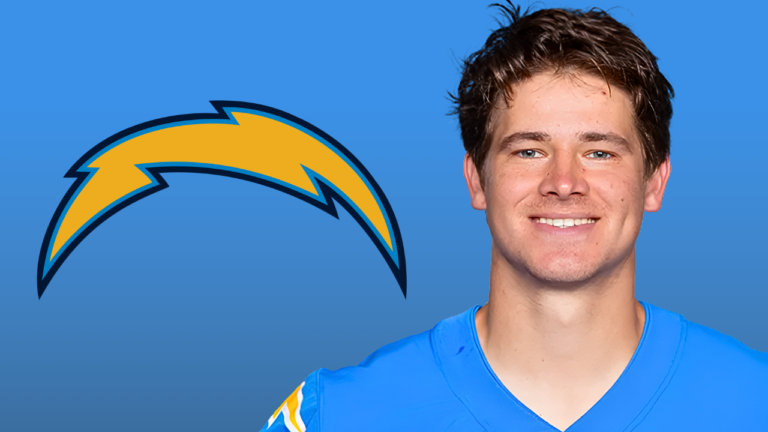
1. Fernando Mendoza, QB, Las Vegas Raiders
Start with the obvious one, because the obvious one is still underpriced in a lot of formats.
The Raiders made Mendoza the No. 1 overall pick of the 2026 NFL Draft, and they did not agonize over it the way the pre-draft cycle suggested they might. The way Sports Illustrated framed the war-room story, the internal read on Mendoza was simple: “Call up Fernando. He’s the guy.” That kind of conviction from the top of a franchise matters for a rookie quarterback’s fantasy outlook, because conviction buys patience, and patience buys a full 17-game runway. Nobody is benching the first overall pick in November.
Mendoza’s 2025 season at Indiana is one of the best statistical quarterback campaigns in recent Big Ten history, and it is not close.
He threw for 3,535 yards, 41 touchdowns, and just 6 interceptions across 16 games while completing 72.0 percent of his passes with a 182.9 passer rating. Indiana went 16-0 and won a national title. Those 41 touchdown passes tie for third in Big Ten single-season history, and his 3,535 yards rank second on the conference’s single-season list. His 273 completions were third-most in a season in Big Ten history.
The efficiency underneath the counting stats is where fantasy managers should lean in. Mendoza finished second in the country in PFF passing grade and fifth in both yards per attempt and EPA per dropback in 2025. A 41-to-6 touchdown-to-interception ratio does not come from empty checkdowns padding a completion percentage. He pushed the ball downfield, stayed accurate, and protected it at the same time. That combination is rare, and it tends to travel to Sundays.
The awards case backs it up. Mendoza swept the individual hardware in 2025: the Heisman Trophy, the Davey O’Brien Award as the nation’s top quarterback, the Maxwell Award, and the Walter Camp Player of the Year, plus AP College Football Player of the Year and consensus first-team All-American honors. He was the first Heisman winner in Indiana football history.
At 6-foot-4 and 236 pounds, Mendoza looks the part of a traditional pocket passer, and the film supports the frame. Scouts consistently praised his post-snap processing, his speed working through progressions, and his placement on sideline and back-shoulder throws. One report highlighted his mental and physical toughness as his top trait, noting he “shows no fear in the pocket and never flinches when pressure is bearing down on him.”
There is a real knock, and you should price it in rather than ignore it. Mendoza completed 76.5 percent of his passes when kept clean but dropped to 51.4 percent under pressure in 2025. Scouts call his mobility functional rather than dynamic, so he will not rescue broken plays with his legs the way a rushing-upside rookie might. Not everyone is sold. At least one ex-scout evaluation went as far as calling him a “guaranteed bust,” and the cycle around his unsigned status turned into its own storyline this offseason. That noise is why the value exists.
For fantasy purposes, the pressure split is the number to watch, and it points directly to the offensive line and the scheme.
Las Vegas is doing the work to protect its investment. The Raiders signed center Tyler Linderbaum to a three-year, $81 million deal this offseason, a serious infusion into a line that needed help, and one that directly addresses the pressure concern on Mendoza’s profile. New head coach Klint Kubiak runs an under-center, play-action heavy system that leans on the run. That scheme reduces the number of pure pressure-cooker dropbacks a rookie has to survive and manufactures the clean-pocket, timing throws where Mendoza is at his best.
The weapons are a mixed bag, and that is the honest caveat on his rookie-year ceiling. The centerpiece is Brock Bowers, who finished as fantasy’s TE2 in PPR points per game in 2025 despite a lingering knee injury, poor quarterback play, and a rough scheme around him. Bowers is the safety blanket every rookie quarterback dreams of, and he profiles as the clear target leader in this offense. Ashton Jeanty, who put up 1,321 scrimmage yards and 10 touchdowns as a rookie, gives Mendoza a genuine three-down back and a checkdown release valve that keeps him out of third-and-long. The receiver room is the weak link. Tre Tucker returns as the nominal No. 1 after earning a 19 percent target share and 34 percent of the team’s air yards last year, and Jalen Nailor arrived on a three-year, $35 million contract, but neither is a true alpha. That is the ceiling limiter for 2026.
Fantasy verdict
In superflex dynasty rookie drafts, Mendoza is going second overall, right behind Jeremiyah Love at 1.01, and most analysts have those two in a tier of their own at the top of the board. That is the correct range. You are buying a first overall pick with a national-title pedigree, elite college efficiency, a run-friendly play-action scheme that fits his game, an ascending offensive line, and the best young tight end in football as his security blanket.
For redraft and superflex managers, temper the Week 1 expectations because of the receiver room and the pressure splits, but understand what you are getting: a QB1-upside rookie with the draft capital and organizational buy-in to play all 17 games. Rookie quarterbacks who start every week and have a Bowers-and-Jeanty floor around them do not fall out of the QB2 range often. Target him as your second superflex quarterback in dynasty and as a high-upside streaming bet late in redraft.
2. Ted Hurst, WR, Tampa Bay Buccaneers
If Mendoza is the value hiding in plain sight, Ted Hurst is the swing that could win your rookie draft in the second round.
Tampa Bay selected Hurst with the No. 84 overall pick in Round 3, making him the 15th receiver off the board. He was the 15th receiver drafted, which is exactly why he is affordable, and the athletic and situational profile suggests the market has him a tier too low.
Start with the frame, because in Hurst’s case the frame is the pitch. He measured 6-foot-4 and 210 pounds and then ran a 4.42-second 40-yard dash at the Combine. That size-speed combination alone puts him in rare air. He backed it up with the best broad jump of any receiver in attendance at 11 feet, 3 inches, plus a 36.5-inch vertical. Scouts described an “elite combination of size, length, speed, and lower-body explosion.”
Receivers who stand 6-4, run in the 4.4s, and test as explosive lower-body athletes rarely last until pick 84. The athletic profile is a first- or second-round body that slid because of where he played and how raw the route running still is.
Hurst is not just a workout warrior. He produced at every stop.
He started at Valdosta State in 2022 and 2023, catching 60 passes for 1,027 yards and 10 touchdowns. He transferred up to Georgia State, and in his first year in 2024 he became the team’s No. 1 receiver with 56 catches for 961 yards and a school-record nine touchdowns. As a senior in 2025 he led the team again with 71 receptions for 1,004 yards and six touchdowns. That is three straight seasons around or above 1,000 yards, at two different programs, as the clear top option each time. The volume and the alpha usage traveled with him when he moved up a level, which is the signal you want from a small-school prospect.
This is the part that should get fantasy managers to sit up. The Buccaneers are replacing franchise legend Mike Evans, who left for the San Francisco 49ers in free agency after 13,052 receiving yards across 12 seasons in Tampa. Evans vacated a huge target and air-yard tree, and the role he left behind is the downfield, contested-catch, big-bodied X-receiver job he owned for over a decade. Hurst’s 6-4 frame and 4.42 speed fit that job.
The room he joins is Chris Godwin, Emeka Egbuka, Jalen McMillan, and Tez Johnson. Godwin projects to work the slot, with Egbuka and McMillan outside, which on paper leaves Hurst rotating in. But Godwin’s injury history, McMillan’s inconsistency, and the sheer volume Evans left behind mean the path to snaps is more open than a Round 3 rookie usually gets. This is not a crowded, locked-in depth chart. It is a room with a giant hole where a No. 1 used to be.
The Buccaneers were open about the upside. “The kid’s got a ton of upside,” the team said. “Big, athletic, fast, good hands. He’s somebody that we’re really excited about, not only the personnel people but the coaches when they got involved in the process, too.”
They were equally clear-eyed about the developmental piece, which is the honest risk with any small-school receiver. “He was productive doing what he was doing but he can be so much better as a route-runner and he has the tools to do that,” the team said, pointing to receivers coach Bryan McClendon. “I would anticipate him at least having a role on special teams and fitting into the rotation somehow. Again, when you’ve got that size and that speed, I can imagine our coaches could get creative and come up with some packages for him to play in.”
That quote is a fantasy manager’s roadmap. The floor is a rotational and special-teams role in Year 1. The ceiling, if the route running catches up under an NFL coaching staff, is the heir to a decade of Mike Evans targets in a pass-friendly offense.
Fantasy verdict
Hurst is going around 22nd overall in superflex dynasty rookie drafts, right at the top of the second round, and multiple analysts have labeled him the upside swing to make in that range. That is the profile you want at that cost: a freaky athletic tester with three years of alpha production, walking into a receiver room that just lost a franchise legend.
Set expectations correctly for 2026. The realistic rookie-year outcome is a No. 4 receiver who works toward a role in three-receiver packages, so this is a stash-and-wait pick more than a plug-and-play starter. But the combination of vacated targets, physical archetype fit, and organizational enthusiasm makes him one of the better bets in the class to outrun his draft position. If you have the roster space to be patient, Hurst is the second-round rookie pick with the widest range of outcomes, and the top of that range is a legitimate WR2.
3. Skyler Bell, WR, Buffalo Bills
The best value on this list might be the one who fell the furthest. The Bills grabbed Skyler Bell in the fourth round at No. 125 overall, and he landed in arguably the single best fantasy ecosystem a rookie receiver could ask for.
Bell spent three seasons at Wisconsin before transferring to UConn, and the move unlocked him completely. His 2025 season was a full-blown breakout.
He caught 101 passes for 1,278 yards and 13 touchdowns, became UConn’s first consensus All-American, and earned Biletnikoff Award finalist honors as one of the best receivers in the country. Put those raw totals in national context: among all receivers and tight ends, Bell ranked fourth in receptions, second in receiving yards, and third in touchdowns. That is elite volume and scoring production, and it came against real competition rather than a soft schedule inflating a stat line.
The counting stats are loud, but the efficiency number is what separates Bell from a volume mirage. He posted 3.13 yards per route run in 2025. For context, anything above roughly 2.5 yards per route run grades as excellent at the college level, and 3.13 sits well into elite territory. Bell was not just soaking up targets in a pass-happy scheme, he was generating yardage on a per-opportunity basis at a rate that translates. Yards per route run is one of the stickiest college-to-NFL indicators for receivers, and Bell’s number is a green flag.
Bell is described as a modern inside-outside receiver with a compact build and enough length to play bigger than his size. Scouts liked his initial quickness off the line, his fluid acceleration into routes, and his ability to change direction. The Combine backed the tape up. Evaluators called him a “twitchy, explosive athlete who can change direction and accelerate out of breaks at a high level,” and his vertical and broad jump numbers ranked among the best at the position. His projected best role is as a slot receiver or movement piece in a quick-passing offense, which is a valuable and increasingly targeted role in modern NFL passing games.
Now the reason to roster him. Bell catches passes from Josh Allen, and that fact reshapes his entire fantasy calculus.
The Bills paired one of the most explosive offenses in football with a receiver who ranked near the top of the country in catches, yards, and touchdowns. The path to targets is more open than a fourth-round tag suggests. Bell’s competition for outside WR2 reps is Keon Coleman and Joshua Palmer, with Khalil Shakir manning the slot. None of those three has locked down an alpha role. Buffalo has hunted for consistent pass-catching help around Allen for years, and Bell’s inside-outside versatility lets the coaches move him around the formation to find matchups instead of parking him behind one player.
The industry has already noticed. One Bills-focused piece ran the “jaw-dropping stats indicate Skyler Bell’s future as the Bills’ No. 1 wide receiver” angle, and the OTA reports have kept the hype train moving. That is aggressive for a Day 3 rookie, and it should be treated as a ceiling case rather than a base case, but the fact that the conversation is even happening tells you how thin the established target competition really is.
Fantasy verdict
Bell is going around 32nd overall in superflex dynasty rookie rankings, which slots him near the end of the third round of most rookie drafts. For a receiver with elite college production, a 3.13 yards-per-route-run efficiency mark, a confirmed athletic profile, and Josh Allen throwing him the ball, that is outstanding value. You are effectively getting a lottery ticket on the best passing offense in football at a fourth-round rookie cost.
The realistic 2026 role is a rotational piece who has to beat out Coleman and Palmer for outside snaps, so do not draft him expecting Week 1 production. But few late-round rookies combine this level of college efficiency with this quality of quarterback play. In dynasty, he is a buy at his current ADP, full stop. In deeper redraft leagues, he is a end-of-bench stash worth monitoring through camp, because a couple of injuries or a slow start from Coleman could hand a productive, efficient rookie real snaps in a Josh Allen offense. That is how league-winners are found on the cheap.
The Bottom Line
Three rookies, three tiers, three different reasons to buy.
Mendoza is the blue-chip investment. A No. 1 overall pick with historically great college efficiency, a scheme that fits, an improving line, and Brock Bowers as a security blanket. Take him as your second superflex quarterback and let the 17-game runway work.
Hurst is the high-upside swing. A 6-4, 4.42 athletic outlier with three years of alpha production, walking into the target vacuum Mike Evans left behind in Tampa Bay. Buy the range of outcomes at the top of the second round of rookie drafts and be patient.
Bell is the value play. Elite college production, an elite efficiency number, and Josh Allen throwing him the ball, all at a third- or fourth-round rookie price. Roster the ticket and see what develops.
The names at the top of everyone’s board will cost you a fortune. The edge in fantasy comes from the players a tier or two down whose profiles do not match their price. These three qualify.
Check out my free SubStack here