

Season Pulse Check
Before we dive into the Lions recap, I want to take a moment to reflect on the journey that brought us here. It’s been years in the making, and this moment deserves appreciation. What a beautiful chapter in Chicago Bears history—full of exhilarating highs and maddening lows—but here we are. The 2025 NFL regular season is behind us, and the playoffs have arrived.
Think about this: the Bears haven’t been in the postseason in five years, haven’t won a playoff game in fifteen, haven’t had a winning season since 2018, and went 16-47 over the four years leading up to this one. To say I’m excited for this week would be an understatement.
The Chicago Bears are the No. 2 seed in the NFC, champions of the North, and owners of both a four-game and five-game winning streak this season. That four-game streak came after back-to-back losses—the same situation we’re in now. The difference? If the Bears win four straight again, they’ll be Super Bowl LX champions.
Let that sink in: the Bears have a legitimate shot at winning a Super Bowl in Year One of the Ben Johnson era. A year ago, no fan could have imagined this. And yes, I mean a legit shot. In a league of 32 teams, only 14 get invited to the dance. If you’re good enough to get in, you’re good enough to play with anyone. That’s what this team does best—compete.
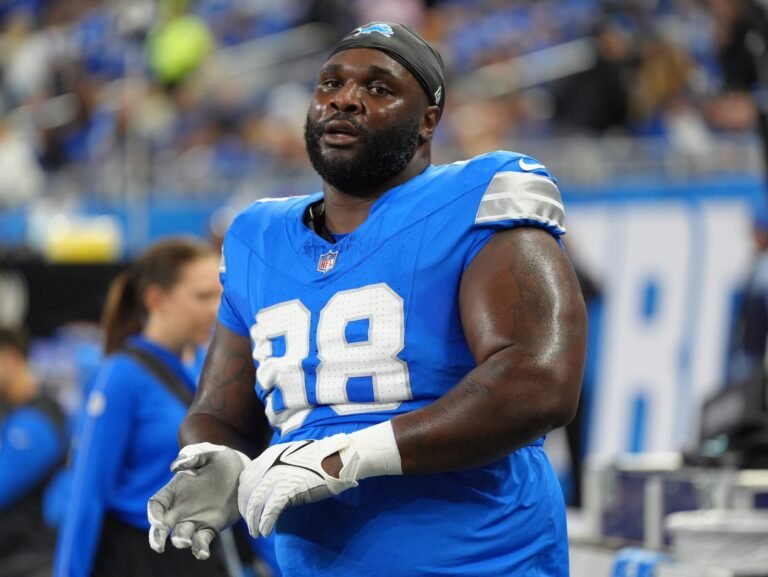
Bears Lions Recap
The Chicago Bears walked off Soldier Field angry after a gut-wrenching 19–16 loss to the Detroit Lions—a game that felt like two different stories. For three quarters, Chicago’s offense looked stuck in neutral, while Detroit methodically built a 16–0 lead behind Jared Goff’s precision and a trio of Jake Bates field goals. The Bears’ defense did its part, bending but never breaking.
Then came the fourth quarter—and Caleb Williams reminded everyone why he’s the face of this franchise. Down 16, Williams lit the spark with a 25-yard strike to rookie Jahdae Walker, followed by Kyle Monangai bulldozing in for the two-point conversion. Suddenly, it was 16–8, and Soldier Field had a pulse. Minutes later, Williams engineered an 88-yard masterpiece, finishing it off with a one-yard dart to Colston Loveland. A two-point toss to Cole Kmet tied it at 16. The stadium shook. The Bears had clawed all the way back. 5:25 on the clock.
Momentum swung even harder when Kevin Byard III picked off Goff deep in Bears territory. 2:23 on the clock. The comeback script was writing itself—until Detroit’s defense slammed the door with a quick three-and-out. That was the opening the Lions needed. Goff marched his team into range, and Bates drilled a 42-yarder as time expired. Just like that, heartbreak.
Still, there were silver linings. Williams finished with 212 yards and two scores, breaking the Bears’ single-season passing record with 3,942 yards—a milestone that speaks volumes about his growth. The defense deserves credit too, holding Detroit to one touchdown and forcing a critical turnover late.
The loss stings, no doubt. But thanks to Philadelphia’s stumble, Chicago locks up the NFC’s No. 2 seed. The fight they showed in the fourth quarter? That’s the kind of resilience that wins in January. The postseason awaits—and if this team plays with that same edge, the story might end very differently.
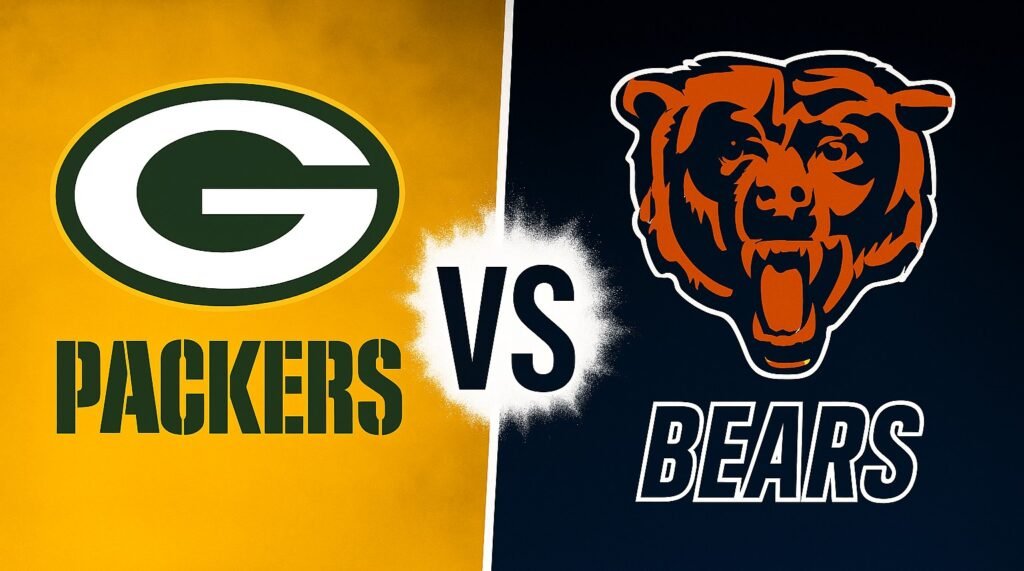
Bears Packers Wild Card Preview
The stage is set. The matchup I wanted. The playoffs are here, and the Chicago Bears will dance with the Green Bay Packers for a third time this season—and only the third time ever in postseason history. The regular season ended in a 1-1 split, and the previous two playoff meetings share the same story: a split, with the winner going on to become Champions of the NFL.
This is the biggest game for the Chicago Bears since the 2010 NFC Championship Game against the Packers. The stakes couldn’t be higher—a chance to send their bitter rival home and begin to rewrite a rivalry that has been dominated by Green Bay for decades.
The Bears Have an Opportunity to Change the Tide of the Oldest Rivalry in the NFL
The Chicago Bears and Green Bay Packers share the oldest rivalry in professional football—a matchup that dates back to 1921. For decades, this rivalry defined the NFL, with hard-hitting defenses, iconic players, and games that often decided division titles. But in recent memory, calling it a “rivalry” has felt generous. Rivalries imply balance, and for the last three decades, balance has been missing.
Since 1990, the Bears have lost 52 times to the Packers and won only 21 games, including the playoffs. That’s not just a slump; it’s a generational drought. Green Bay has dominated, and Chicago has struggled to keep pace. The disparity becomes even clearer when you look at the quarterback position—the most important role in football.
Since Brett Favre took over in 1992, the Packers have had three primary starters: Favre, Aaron Rodgers, and now Jordan Love. The Bears? Thirty-seven different starters. That instability has been the Achilles’ heel of Chicago football for decades. Quarterback play has been the secret to Green Bay’s sustained success.
Favre and Rodgers didn’t just win games—they defined eras. They gave the Packers consistency, leadership, and the ability to compete every single season. Meanwhile, the Bears cycled through names like Erik Kramer, Rex Grossman, Jay Cutler, and Mitch Trubisky, searching for the answer that never came. Until now.
Enter Caleb Williams: The Franchise Quarterback Chicago Has Been Waiting For
Caleb Williams represents something the Bears haven’t had in nearly half a century: stability at quarterback. Williams is 2-2 against Green Bay and has already made history as the first Bears QB to start every game in back-to-back seasons since Bob Avellini in 1976–77. He’s just nine starts away from breaking Avellini’s franchise record of 42 consecutive starts—a record that speaks more to Chicago’s struggles than its success.
But Williams isn’t just starting games; he’s ascending to stardom in real time. His poise, arm talent, and ability to make plays under pressure have given the Bears something they’ve lacked for decades: hope. For the first time in years, Chicago fans can look at their quarterback and believe he can go toe-to-toe with anyone in the league—including the Packers.
Why Saturday Night Matters
This weekend’s matchup isn’t just another game—it’s a turning point. If Williams can lead the Bears to victory, it won’t erase the past, but it will signal a new era. It will legitimize the rivalry as competitive again and, more importantly, show that Chicago is ready to reclaim its place among the NFL’s elite.
A win would mean more than bragging rights. It would mean the Bears finally have the formula Green Bay has relied on for decades: a franchise quarterback who can change the trajectory of the team for years to come. It would mean the oldest rivalry in football is no longer one-sided. It would mean the tide is turning. If Caleb Williams delivers, the Bears won’t just win—they’ll announce that the rivalry is back, and this time, it’s here to stay.
Top 3 Matchups to Watch For
Caleb Williams vs Packers Pash Rush
Caleb Williams enters this matchup with a significant advantage against a Packers pass rush that has been virtually nonexistent recently. The lack of pressure on opposing quarterbacks has been one of Green Bay’s most glaring weaknesses, and it could play right into Williams’ strengths as a passer.
The turning point for the Packers’ defensive struggles came when Micah Parsons went down with a torn ACL. Since then, their front seven has collapsed, losing the disruptive force that anchored their pass rush. Without Parsons, the unit has lacked both speed off the edge and the ability to consistently collapse the pocket.
Over the course of their four-game losing streak, the Packers have managed just three sacks—a startling statistic for a team that once prided itself on defensive pressure. Two of those sacks came in a meaningless Week 18 matchup against Minnesota, while the other was a zero-yard sack against Baltimore. These numbers highlight just how ineffective the pass rush has become.
For Williams, this means time—something every quarterback covets. With a clean pocket and minimal pressure, he should have the opportunity to go through his progressions, exploit mismatches, and attack the Packers’ secondary. If Green Bay cannot generate pressure, Williams could turn this game into a showcase of his arm talent and decision-making.
Bears Defense vs. Jordan Love: Win with Pressure and Turnovers
Jordan Love has shown he can hurt defenses with big plays, and that’s exactly what the Bears must prevent. Explosive gains have fueled Green Bay’s offense, and if Chicago allows Love to connect on deep shots or chunk yardage, it could flip the game in an instant. The secondary needs to stay disciplined, keep everything in front, and force the Packers to grind out long drives instead of striking quickly.
But limiting big plays isn’t enough—the Bears have to create turnovers. Love has been vulnerable when forced into tight windows or hurried decisions, and Chicago needs to capitalize. Whether it’s jumping a route, stripping the ball, or forcing an errant throw, a takeaway could completely change the momentum and give Caleb Williams a short field to work with.
The key to making that happen? Pressure. The Bears’ defensive front cannot afford to let Love sit comfortably in the pocket. Even if sacks don’t pile up, consistent pressure will disrupt his timing and force mistakes. Collapsing the pocket, sending creative blitzes, and winning one-on-one matchups up front will be critical to throwing Love off rhythm and preventing him from setting his feet for deep throws.
Ultimately, the formula is simple: pressure Love, take the ball away, and eliminate explosive plays. If Chicago executes those three things, they’ll control the pace of the game and put themselves in position to walk away with a win.
Bears Rushing Attack vs Packers Run Defense
As mentioned in the Week 16 preview. The battle between the Packers’ run defense and the Bears’ rushing attack could be the most decisive factor in this playoff matchup. Chicago enters the game with one of the league’s most dominant ground games, ranking third overall and averaging 144 rushing yards in their two regular-season meetings with Green Bay. This success has been a cornerstone of the Bears’ offensive identity, allowing them to control tempo and dictate the pace of play.
At the heart of this rushing attack are D’Andre Swift and Kyle Monangai, who provide a dynamic one-two punch capable of wearing down defenses. Their ability to consistently move the chains not only keeps Caleb Williams in favorable situations but also opens up opportunities for play-action passes that can stretch the Packers’ secondary. If these backs find early success, Chicago will be able to sustain long drives and keep Jordan Love and the Packers’ offense on the sideline.
For Green Bay, the challenge is clear: replicate the stout run defense they showcased earlier in the season. That means winning battles at the line of scrimmage, maintaining gap discipline, and forcing the Bears into third-and-long situations. If the Packers fail to contain the ground game, Chicago will control possession and momentum—giving them a significant advantage in this high-stakes playoff showdown.
Keys to the Game for Chicago
- Run the ball efficiently and play clock-control football early
- Score touchdowns on early possessions. The Bears are 10-1 this season when scoring 7 or more points in the first half.
- Pressure Jordan Love, shut down red-zone offense, and prevent explosive plays
- Win the turnover battle through calculated aggression
- Dominate the trenches and minimize mistakes
- Use home-field advantage and strong starts to shape momentum
Prediction
The Bears will grind out a hard-fought 24–20 victory over the Packers in this Wild Card clash at Soldier Field. Chicago’s balanced attack, led by Caleb Williams and the dynamic backfield duo of D’Andre Swift and Kyle Monangai, will control the tempo and exploit Green Bay’s vulnerable run defense.
While Jordan Love and Jayden Reed will keep the Packers competitive with a few big plays, the Bears’ opportunistic defense will force a key turnover late, sealing the win. In front of a roaring home crowd, Chicago advances to the next round, proving their resilience and playoff readiness.