


The Philadelphia Eagles fell to 2-7 in the 2026 NFL season after another disappointing performance, losing 19-11 to the New York Giants on Sunday afternoon at Lincoln Financial Field. Philadelphia entered the divisional matchup looking to end its six-game losing streak and get its season back on track. However, another ineffective offensive performance, combined with struggles in pass protection and an inability to establish the running game, allowed New York to secure the victory. Despite a strong Philadelphia defense, the Eagles failed to generate enough offense to mount a comeback. The loss extended Philadelphia’s losing streak to seven games and marked another frustrating chapter in an increasingly disappointing season.
Philadelphia entered Week 9 facing another major change at quarterback. With the bad performance that Tanner McKee had last week the eagles have made the change at QB brining in Joe Milton III for his first career NFL start. The quarterback change was an attempt by head coach Nick Sirianni and offensive coordinator Sean Mannion to spark a different kind of offense. Milton brought added athleticism and mobility to the position, something Philadelphia hoped would help against a Giants defense that can generate pressure.
The Eagles also needed a much stronger performance from running back Saquon Barkley. Barkley entered the matchup looking to establish consistency after struggling to find running room dealing with a limited snap count against Dallas and Washington.

New York entered the game with a 5-2-1 record and an opportunity to strengthen its position in the NFC East. Quarterback J.J. McCarthy led the Giants’ offense, while wide receiver Malik Nabers and tight end Isaiah Likely provided important options in the passing game. The Giants opened the game with an effective offensive possession, moving the football into Philadelphia territory before kicker Dominic Zvada connected on a 53-yard field goal. New York took an early 3-0 lead. The Giants added another field goal during their next scoring opportunity. Zvada connected from 49 yards, extending New York’s advantage to 6-0 during the opening quarter.
Philadelphia responded with its best first-half offensive possession. Milton helped lead an eight-play, 58-yard drive that ended with Barkley scoring on a three-yard touchdown run. Rather than attempt a conventional extra point from Jake Elliot, and a flag on the giants during the extra point attempt the eagles successfully completed a two-point conversion when Milton ran into the end zone. The successful conversion gave the Eagles an 8-6 lead. Barkley’s touchdown was an encouraging moment for Philadelphia. After struggling to establish the running game in previous weeks, the Eagles finally got their star running back into the end zone.
However, the Eagles’ offensive momentum quickly disappeared. New York’s defensive front began applying consistent pressure on Milton, making it hard for Philadelphia to find a rhythm. Neither team scored in the second quarter. Both defenses controlled much of the action, while the Eagles continued struggling to protect their quarterback. Philadelphia entered halftime with an 8-6 lead, but the offense had yet to establish the consistency needed to maintain it.
The third quarter began with New York’s most productive offensive possession of the afternoon. McCarthy helped lead a 14-play, 76-yard drive that chewed up nearly eight minutes. However, McCarthy left the game temporarily with an injury, forcing veteran quarterback Jameis Winston to enter the game. Winston capitalized, connecting with tight end Isaiah Likely for a five-yard touchdown reception. Zvada converted the extra point, giving New York a 13-8 lead.
The touchdown exposed a breakdown in Philadelphia’s secondary. Likely found himself open in the end zone, allowing Winston to deliver an easy scoring pass and give the Giants control of the game. Philadelphia struggled to respond during the remainder of the third quarter. Milton continued facing pressure from New York’s defensive front, while the Eagles’ running game failed to create consistent opportunities.
The fourth quarter began with the Giants extending their advantage. Zvada connected on a 38-yard field goal, increasing New York’s led to 16-8. Philadelphia desperately needed an offensive response, but the Giants continued applying pressure. Rookie linebacker Arvell Reese from Ohio State became one of Milton’s biggest problems, consistently disrupting plays and creating negative yardage.
New York added another field goal when Zvada connected from 49 yards, extending the Giants’ advantage to 19-8. Philadelphia finally responded with a productive offensive possession late in the fourth quarter. Milton helped lead a 10-play, 48-yard drive that moved the Eagles into scoring position. Jake Elliott connected on a 45-yard field goal, cutting New York’s led to 19-11. The score gave Philadelphia a brief opportunity to make the game interesting. The Eagles needed a defensive stop and another offensive possession to potentially complete a comeback.
However, New York’s defense continued controlling the line of scrimmage. Philadelphia struggled to generate another scoring opportunity, allowing the Giants to run out the remaining time and secure the eight-point victory. The loss was especially disappointing considering Philadelphia’s defense recorded six sacks and consistently pressured both New York quarterbacks. The Eagles’ defense created opportunities, but Philadelphia couldn’t capitalize.

Eagles’ Offensive Struggles Continue Despite Defensive Effort
Milton completed 18 of 34 passes for 169 yards, zero touchdowns, and no interceptions. Although he avoided throwing an interception in his first career start, Philadelphia’s passing attack struggled to produce consistently. Milton’s biggest contribution came through his mobility. He finished with nine rushing attempts for 64 yards, averaging 7.1 yards per carry. His ability to escape pressure and extend plays provided Philadelphia with some of its most productive offensive moments.
However, New York’s defensive front also put significant pressure on Milton. The Giants recorded seven sacks, giving Philadelphia 41 lost yards. Milton was hit 11 times while attempting passes, making it hard for him to find a rhythm.
Barkley finished with 13 carries for just 22 yards and one touchdown, averaging 1.7 yards per attempt. His three-yard touchdown during the first quarter was Philadelphia’s only touchdown of the afternoon. The Eagles’ inability to create running lanes remained one of the biggest problems for an offense that entered the season expecting Barkley to be a major contributor.
Rookie wide receiver Makai Lemon led Philadelphia in receiving, catching six for 61 yards. Tight end Dallas Goedert caught five passes for 50 yards, while Darius Cooper caught two for 25 yards. Despite those individual contributions, Philadelphia struggled to convert opportunities into points. The Eagles finished with just 13 first downs and converted five of their 18 third-down attempts.
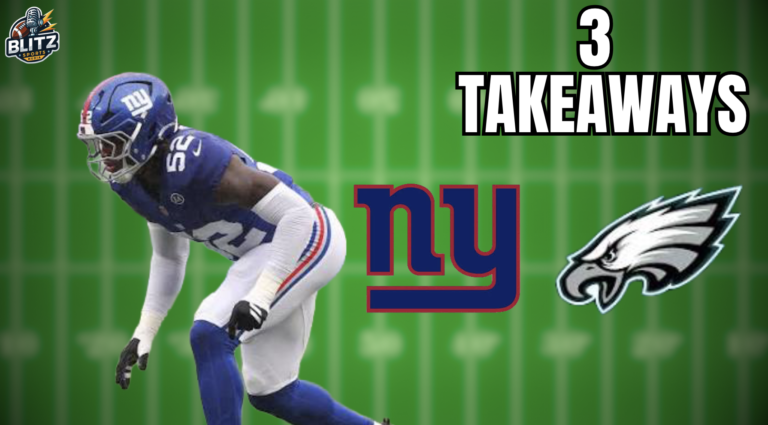
The offensive line was another major concern. New York’s defense consistently pressured the line, recording seven sacks and 10 tackles for loss. Rookie linebacker Arvell Reese was particularly impressive, finishing with 12 tackles, three sacks, and a forced fumble. Reese’s performance was a major reason New York controlled the game defensively. His ability to pressure Milton and disrupt Philadelphia’s running game kept the Eagles from building sustained offensive momentum.
Philadelphia’s Defense Shows Improvement
Although the offense struggled, Philadelphia’s defense delivered one of its better performances during the losing streak. The Eagles recorded six sacks against New York, including contributions from defensive end Jonathan Greenard and linebacker Jalyx Hunt. Greenard recorded his first sack as a member of Philadelphia, while Hunt recorded his first sack of the season. Defensive tackle Jordan Davis also delivered an impressive performance, recording a sack against McCarthy and helping limit New York’s rushing production.
The Eagles held Giants running back Devin Singletary to just 31 yards on 21 carries, averaging 1.5 yards per attempt. Philadelphia also finished with 14 tackles for loss, demonstrating how effectively its defensive front controlled the line of scrimmage.
McCarthy finished completing 12 of 19 passes for 127 yards without a touchdown or interception. Winston completed six of eight passes for 71 yards and one touchdown after entering the game during the third quarter. Likely finished with five receptions for 53 yards and one touchdown, becoming New York’s most important receiving threat in the red zone. Darnell Mooney also caught three passes for 54 yards, while Nabers caught five for 43 yards.
New York’s ability to protect its quarterbacks well enough to generate scoring opportunities proved important, even though Philadelphia consistently created pressure. The Eagles’ defense gave the offense chances to stay competitive. Unfortunately, Philadelphia’s inability to finish drives ultimately kept the team from capitalizing on its defensive success.

What Comes Next for Philadelphia?
For Sirianni, the seventh straight loss raises serious questions about Philadelphia’s season direction. The Eagles entered 2026 with expectations of competing near the top of the NFC, but their 2-7 record has put them in a tough spot.
The quarterback situation remains one of the team’s biggest storylines. Milton got his first career start, but his performance showed Philadelphia still has significant offensive problems to address. The offensive line must also improve its pass protection. Allowing seven sacks against New York made it extremely difficult for Milton to operate effectively, while continued struggles in the running game have kept Philadelphia from establishing a balanced attack.
The defense, however, showed some encouraging signs. Recording six sacks and limiting Singletary to just 31 rushing yards showed Philadelphia can still compete defensively.The biggest challenge moving forward will be getting the offense to complement the defense. Philadelphia can’t keep relying on its defense to keep games close while failing to consistently score.
The Eagles now enter their Week 10 bye and with the trade deadline fast approaching set for tomorrow at 4pm, the eagles might make move on either side of the ball to help them end the losing steak still compete in the division and this bye will help gives coach’s staff more time to evaluate the roster, address offensive problems, and determine the best direction for the rest of the season.
Philadelphia returns in Week 11 to host the Pittsburgh Steelers. The matchup will give the Eagles another chance to end their losing streak and start rebuilding momentum. Despite the disappointing season, the bye week could give Philadelphia an important chance to regroup. However, the Eagles will need significant improvements if they hope to turn their season around.
Eagles vs. Giants Team Statistics
| Statistic | Eagles | Giants |
|---|---|---|
| Final Score | 11 | 19 |
| Total Yards | 220 | 243 |
| Passing Yards (net) | 128 | 163 |
| Rushing Yards | 92 | 80 |
| First Downs | 13 | 15 |
| Third Down | 5/18 | 6/17 |
| Fourth Down | 1/3 | 1/1 |
| Turnovers | 1 | 1 |
| Penalties | 6-56 | 9-86 |
| Sacks | 6 | 7 |
| Time of Possession | 25:15 | 34:45 |
Final: New York Giants 19, Philadelphia Eagles 11. The Eagles fall to 2-7, while New York improves to 5-3-1 and is the first-place team in the NFC east division this 2026 NFL season. Philadelphia has now lost seven straight and will enter its Week 10 bye before returning in Week 11 to face the Pittsburgh Steelers at Lincoln Financial Field at 1pm on CBS.