


Draft capital tells you what an NFL front office believes. Opportunity tells you what a fantasy manager can cash. The trick every August is separating the two, because the rookies who win leagues are rarely the ones with the loudest name recognition. They are the ones whose landing spot, athletic profile, and scheme fit line up into a clean path to touches.
This year’s class gives us three players who sit at very different points on that curve. One is a big-bodied outside receiver walking into a wide-open depth chart with a shaky quarterback situation. One is a record-setting college back who slid to Day 3 and landed behind a crowded backfield. One is a tight end with a Mackey Award and a first-round skill set who happens to be stuck behind one of the best receiving tight ends in football. Each requires a different draft-day plan, and each rewards managers who understand the numbers under the hood.
Here is the analytics-first case for targeting WR Denzel Boston, RB Nicholas Singleton, and TE Eli Stowers in 2026.
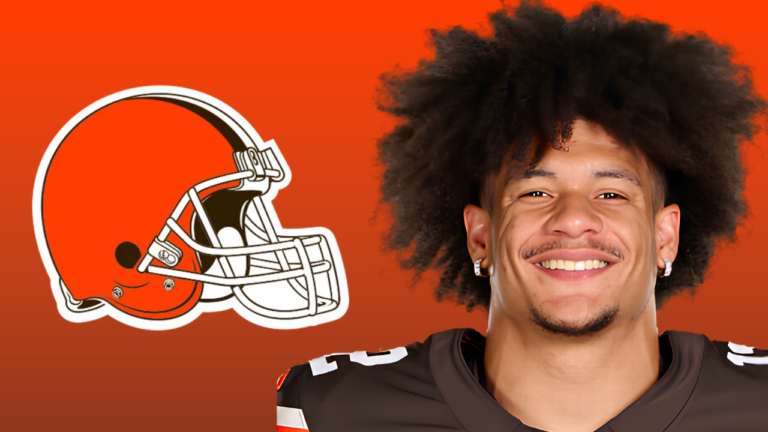
WR Denzel Boston, Cleveland Browns
The Browns took Denzel Boston with the 39th overall pick, the seventh selection of the second round. That is meaningful draft capital for a receiver, and it lands him in a receiver room that finally has some juice for the first time in years. The projected alignment has Jerry Jeudy at the Z, KC Concepcion in the slot, and Boston at the X. For a rookie, the X spot is the one you want. It is the isolation role, the guy who works the boundary, wins one-on-one on the outside, and eats red-zone targets when the field compresses.

Start with the college production, because it is excellent. In 2025 Boston caught 62 passes for 881 yards and 11 touchdowns while earning third-team All-Big Ten honors. Eleven touchdowns on 62 catches is a 17.7 percent touchdown rate, which is elite red-zone conversion. The number that should get every analytics-minded manager to sit up, though, is the drop rate. Per TruMedia, Boston posted a 1.2 percent drop rate on the season. Receivers with hands that reliable at 6-foot-3 tend to earn quarterback trust quickly, and quarterback trust is the currency that turns raw target volume into actual fantasy points.
The physical profile backs up the tape. Boston measured 6 feet 3⅝ inches and 212 pounds with 32-inch arms and a wingspan just under 6 feet 5½ inches. That is a prototype boundary X-receiver build, the kind of frame that wins on back-shoulder throws, contested catches, and fade routes inside the 10-yard line. He tested well in the short-area drills that matter for a big receiver, running a 4.28-second 20-yard shuttle and a 6.80-second three-cone, and he bumped his vertical to 37.5 inches at his pro day, which reinforces the short-area explosiveness you see on film.
Now the honest part, because analytics means looking at the whole picture. Boston did not run the 40-yard dash at the Combine, and he chose not to run it at his pro day either. Evaluators notice when a receiver with his build passes on the one drill that answers the long-speed question. There is a real chance Boston is more of a possession and red-zone weapon than a vertical field-stretcher, and that shapes his fantasy archetype. He profiles closer to a high-floor volume and touchdown scorer than a boom-or-bust deep threat. That is not a knock for fantasy purposes. Big-slot and boundary receivers who dominate the intermediate area and the end zone score plenty of points in PPR formats.
The complication, and the reason Boston is a target rather than a lock, is the quarterback situation. Cleveland enters 2026 with an unresolved competition between veteran Deshaun Watson and second-year man Shedeur Sanders under new head coach Todd Monken. Sanders took over as QB1 late in his rookie year and put up modest numbers across seven starts, throwing for 1,400 yards with seven touchdowns and 10 interceptions. His average time to throw of 3.24 seconds was the longest of any qualified quarterback in 2025. A long time to throw can be a double-edged sword. It can mean a young passer holding the ball too long, or it can mean a quarterback willing to let downfield routes develop, which is exactly the kind of window a big X-receiver needs to work back-shoulder and contested throws.
Here is the projection that matters. Multiple outlooks expect Boston to climb the depth chart as the season goes on, potentially overtaking Concepcion to become the Browns’ WR1 by year’s end, with Concepcion at WR2 and Isaiah Bond at WR3. Jeudy is the established veteran, but he has never locked down a consistent target monopoly, and rookie X-receivers with second-round capital and a clean route to the boundary role frequently see their snap share and target share climb after Week 8. The fantasy plan is straightforward. In redraft leagues, Boston is a late-round bench stash with weekly flex upside that grows as the season develops. In dynasty and best-ball formats, he is a firm target, because the draft capital, the frame, the hands, and the projected role all point toward a WR2 ceiling once the target hierarchy sorts itself out. You are buying the arc, not the Week 1 box score.
RB Nicholas Singleton, Tennessee Titans
Nicholas Singleton is the value play of this group, and the analytics case for him is loud even though his draft slot was quiet. The Titans took him in the fifth round at pick 165, which reads like a modest investment until you look at what the player actually is. This is a four-year Penn State back who finished his career as the program’s all-time leader in rushing touchdowns, total touchdowns, and all-purpose yards, passing Saquon Barkley in career rushing scores along the way. Production against Big Ten defenses at that level does not disappear because a player fell to Day 3.
The full college ledger is the foundation. Across four seasons Singleton carried 622 times for 3,461 yards and 45 rushing touchdowns while adding 102 receptions for 987 yards and nine receiving scores. He totaled 55 career touchdowns and 5,586 all-purpose yards. The receiving line is the part that should excite fantasy managers, because pass-catching backs are the ones who survive committees. A back who caught 102 balls in college is not a two-down grinder who leaves the field on third down. He is a back with a built-in path to snaps in obvious passing situations, which is where PPR points are made.
His 2025 senior line looks smaller at 123 carries for 549 yards, but the touchdown production spiked to 13 rushing scores, a single-season program record, plus 22 catches for 196 yards and a receiving touchdown. The reduced volume was a function of a shared Penn State backfield, not diminished ability. When you split the same carries with a talented committee, your per-game rushing yards fall even as your efficiency and finishing hold up. The 13 touchdowns on 123 carries is a 10.6 percent rushing touchdown rate, which is outstanding nose-for-the-end-zone production.
The athletic testing is where Singleton separates from the typical fifth-round flier. He is listed between 6-foot and 219 to 227 pounds, and Penn State clocked him at 4.35 seconds in the 40-yard dash. That time would have ranked second among all running backs at the 2026 Combine, where Singleton attended without participating on the field. He also put up 25 bench-press reps of 225 pounds, which again would have placed second among Combine running backs. Rare speed and rare strength in the same 220-plus-pound frame is an uncommon combination. This is a back who can hit a home run and also break tackles between the tackles.
So why did he fall, and what does it mean for fantasy? The knock is vision. Scouts flagged that Singleton needs to improve his ability to read blocks and find the crease, which is a coachable trait but a real one. The Titans backfield is also crowded. Tony Pollard opens as the clear RB1, Tyjae Spears is the No. 2, and Singleton slots in around third on the depth chart with Michael Carter and others competing for the remaining roles. That is a real logjam in front of him in the short term.
The path is still there, and it runs through the passing game. Singleton’s receiving résumé, kick-return ability, and explosive-play profile give him more ways onto the field than a standard rotational back. If he holds up in pass protection, he has legitimate three-down upside, and even if he starts as a situational weapon, his passing-down value gives him a route to meaningful snaps quickly. Pollard has never been a true bell-cow who blocks fantasy backfields from producing a second useful piece, and Spears has an injury history worth monitoring. Singleton is the definition of a high-value handcuff and a smart late-round dart throw. In redraft, he is a stash in deeper leagues and a priority pickup the moment the depth chart moves. In dynasty, his age, production, and athletic testing make him a screaming buy at his likely cost, because the ceiling if he ascends the depth chart dwarfs the fifth-round price. This is exactly the kind of back who is worthless in September and a league-winner by November if one thing breaks his way.
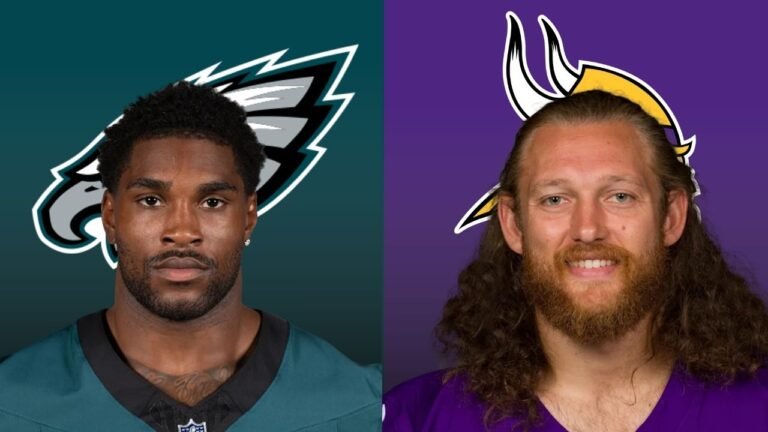
TE Eli Stowers, Philadelphia Eagles
Eli Stowers is the boom-or-bust ceiling swing of this trio, and the analytics case rests on a simple premise. Second-round tight ends who won the Mackey Award do not usually sit for long. The Eagles took Stowers 54th overall, making him the first Vanderbilt player off the board in the 2026 class, and his college résumé is loaded. He won the John Mackey Award as the nation’s best tight end, the first player in Vanderbilt history to do so, earned AP All-American honors, and picked up back-to-back All-SEC nods.
The production explains the hardware. In 2025 Stowers caught 62 passes for 769 yards and four touchdowns, leading all tight ends in the entire country in receiving yardage. He was not merely his team’s best tight end. He was Vanderbilt’s leading pass-catcher outright, the focal point of the passing game at a Power Four program in the toughest conference in college football. That kind of target concentration matters, because tight ends who commanded true alpha usage in college tend to translate their receiving skills faster than the run-blocking specialists who backed into the position.

Stowers’ background is the fun part of the scouting profile. He is a converted quarterback who began his career at Texas A&M, spent a year at New Mexico State, and finished with two seasons at Vanderbilt. A former quarterback playing tight end usually means advanced feel for coverage, soft hands, and natural body control in space, all traits that show up on his tape. At 239 pounds he has the frame to develop inline, and his versatility to line up as a traditional tight end, in the slot, or detached out wide is precisely the kind of chess-piece flexibility that modern offenses covet. That alignment versatility is the scheme hook that gives him a role beyond a single package.
Now the wall, and it is a big one. Dallas Goedert is not going anywhere in 2026. Goedert is coming off 11 touchdown catches, a single-season franchise record for a Philadelphia tight end, and the Eagles brought him back on a one-year deal as the clear TE1. Early in training camp the pecking order had Goedert starting, veteran Grant Calcaterra-type depth ahead of the rookie, and Stowers working as the third tight end. The new offense under Sean Mannion reportedly wants a blocking tight end paired with a receiving tight end in 12-personnel, and Stowers’ still-raw run-blocking makes him the odd man out of the early rotation. That is the reality check every fantasy manager needs to hear before spending a pick.
The reason he stays on the target list anyway is the shape of the opportunity. Goedert is on a one-year deal, which means the Eagles drafted Stowers in the second round to be the future of the position, not a career backup. Tight end is the position where rookies most often disappoint in Year 1, so nobody should draft Stowers expecting weekly production out of the gate. What you are buying is the combination of premium draft capital, elite college production, and a defined succession plan behind an aging veteran on an expiring contract. In redraft, he is a bench stash in deeper one-tight-end leagues and a name to monitor for the moment Goedert misses time, since Philadelphia’s offense funnels red-zone work to the tight end position at a high rate. In dynasty, Stowers is the clearest long-term target of the three, a potential top-eight tight end within two seasons if the receiving traits carry the way his Mackey Award suggests they will. The FOX Sports comparison to Brock Bowers is aggressive, and it is the kind of upside that makes a second-round rookie tight end worth rostering through a quiet rookie season.
The Bottom Line
These three players share a theme that runs through every good rookie fantasy target: the talent and the draft capital are already in place, and the only variable is opportunity. Boston has the cleanest immediate path, an X-receiver role on a team whose target hierarchy is unsettled, which is why he carries the highest redraft floor of the group even with a murky quarterback picture. Singleton is the best value, a record-setting, freakishly athletic back sitting at a Day 3 price with real three-down upside if the crowd in front of him thins. Stowers is the purest ceiling bet, a Mackey Award winner biding his time behind a franchise-record veteran on a one-year deal.
The analytics-minded approach is to weight each one to the format you are drafting. In redraft, prioritize Boston for the nearest-term role, hold Singleton as a high-upside stash, and treat Stowers as a speculative add in deeper leagues. In dynasty and best-ball, the order flips toward long-term equity, and all three belong on your target list, with Singleton and Stowers offering the kind of buy-low windows that win leagues a year from now. Draft the opportunity, trust the profiles, and let the touches come.
Check out my free SubStack here